
What documents are needed for a New York Medicaid application?
Bobby Mendelovitz
Nov 13 2026 14:00
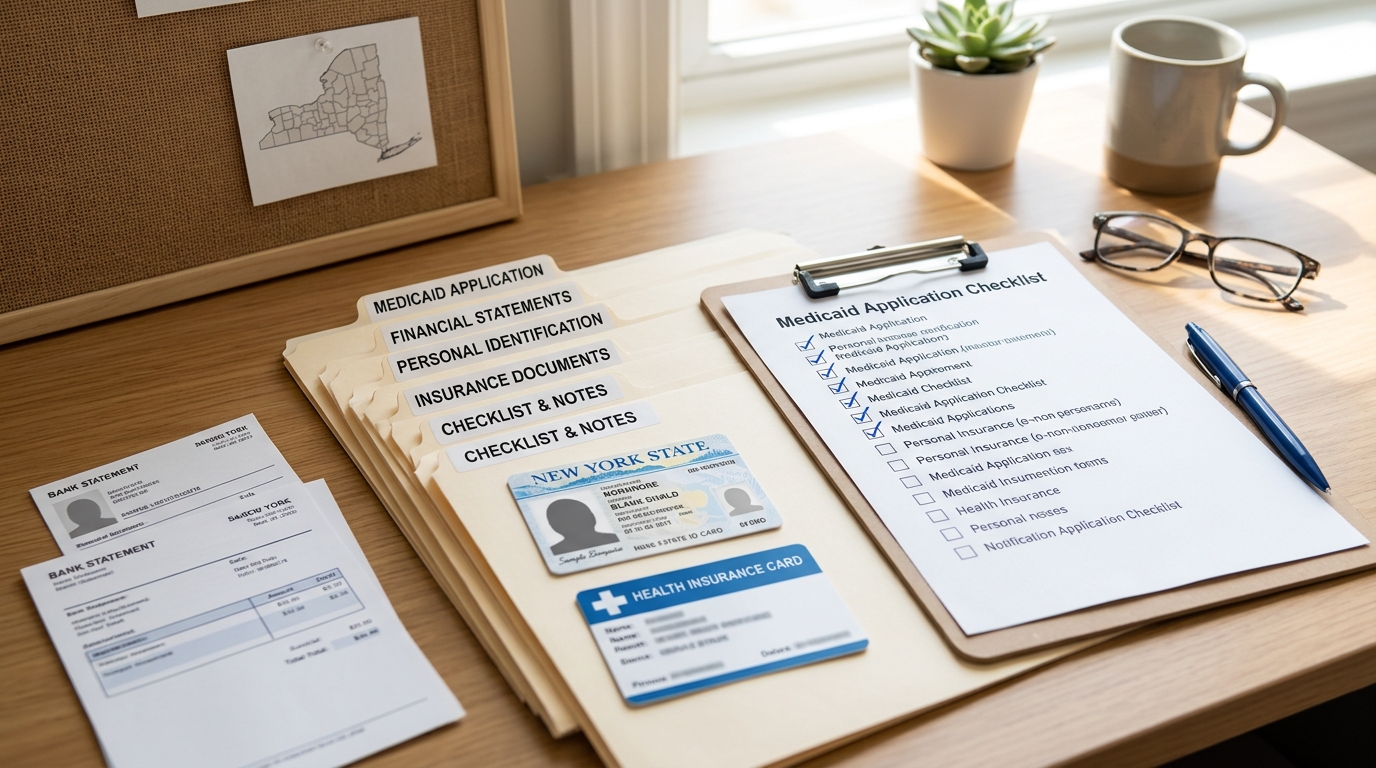
Applying for Medicaid can feel overwhelming, especially when you are managing health needs, care arrangements, and family responsibilities at the same time. In general, New York Medicaid applications may require documents showing identity, residency, income, resources, insurance, medical needs, and certain financial history. The exact paperwork depends on the program, the applicant’s circumstances, and the type of coverage or home care support being requested.
For seniors and adult children helping a parent, a well-organized document file can make the process clearer and may help prevent avoidable follow-up requests. Elder Healthcare Services helps New Yorkers understand what information may be needed, prepare applications, and address problems that arise along the way.
Why Medicaid Paperwork Varies From Case to Case
There is no single checklist that fits every Medicaid applicant. Someone seeking basic health coverage may be asked for different information than someone pursuing Community Medicaid, long-term care coverage, or Medicaid home care in New York.
Household size, marital status, sources of income, bank accounts, property interests, insurance coverage, and the care being requested can all affect the documentation needed. Requirements can also change when an application is renewed or when the agency asks for clarification about a particular item.
That is why it is important not to assume that a neighbor’s list, an old online checklist, or paperwork from a prior application will fully apply to your situation. For Medicaid application help in New York, it is often useful to review the request in the context of the individual’s current circumstances.
Identity and Age Documents
Applications commonly begin with proof of who the applicant is. Depending on the case, useful documents may include a government-issued photo identification card, birth certificate, passport, Social Security card, or immigration documentation when applicable.
Keep copies that are readable and current whenever possible. If a document has a different name than another record—for example, because of marriage, divorce, or another legal name change—supporting documentation may also be helpful. Small inconsistencies can lead to questions that slow down processing.
Proof of New York Residency
Applicants generally need to show that they live in New York. Residency documents may include a lease, utility bill, recent mail from a government agency, a rent receipt, or another record showing the person’s name and residential address.
This can be especially important for an adult child who is helping a parent after a move, hospitalization, or transition into a relative’s home. If the applicant lives with family, has recently relocated, or does not receive bills in their own name, the right way to document residency may require a closer look.
Elder Healthcare Services provides Medicaid application assistance for families in Brooklyn, the Bronx, Queens, Manhattan, Buffalo, Syracuse, and communities throughout New York. We help clients identify practical ways to organize residency documentation without treating every household situation as identical.
Income Records: Social Security, Pensions, and More
Medicaid may request records of income from all relevant sources. For many older adults, this can include Social Security benefit letters, pension statements, retirement distributions, wages, veterans’ benefits, annuity payments, or other recurring payments.
It is helpful to gather the most recent notices and statements, along with documentation for any income that has recently changed. Adult children should also remember that a deposit appearing in a bank account may prompt questions if its source is not obvious from the records provided.
Income questions do not automatically mean a senior cannot qualify. New York Medicaid planning can involve reviewing the program sought, the person’s income, and available options with care. EHS can explain the paperwork involved and provide guidance on matters such as pooled income trusts when that type of planning may be appropriate.
Assets and Resource Documentation
Depending on the program and case, applicants may need to provide information about resources such as checking and savings accounts, certificates of deposit, brokerage accounts, retirement accounts, life insurance, real estate, vehicles, and other property interests.
Gathering statements in advance is often easier than trying to locate them after a deadline arrives. Make a simple list of every account, institution, and policy, even if an account has a small balance or is no longer actively used. Then review what documentation is available for each item.
Questions about savings or property can be stressful, particularly for retirees who assumed they had too much money for Medicaid. Before making financial changes, families should seek individualized guidance. Elder Healthcare Services offers Medicaid eligibility consultations that help families understand the documentation and planning issues relevant to their circumstances.
Health Insurance and Medicare Information
Bring records for current health coverage, including Medicare cards, private health insurance cards, prescription coverage information, managed care plan materials, and notices from insurers. These records help clarify existing coverage and may be relevant when someone is applying for Medicaid benefits or exploring home care support.
Having Medicare does not necessarily eliminate the need to explore Medicaid. The programs can work differently, and a person’s health coverage, care needs, and financial situation should be evaluated together. Keep notices about premiums, coverage changes, and plan enrollment with the rest of the application file.
Medical and Home Care Records
When a person is seeking assistance connected to care at home, documents about health needs and daily functioning may become important. Relevant records can include physician information, discharge paperwork, care plans, medication lists, home care assessments, and notes describing help needed with daily activities.
These records are not a substitute for required assessments or agency determinations, but they can help a family communicate a clearer picture of the applicant’s needs. For someone seeking Medicaid home care in Brooklyn, the Bronx, Queens, Manhattan, Buffalo, or Syracuse, keeping care-related information together can reduce the scramble when additional records are requested.
EHS supports families with elder care coordination and Medicaid home care guidance, including help understanding the application process and the steps that may follow eligibility.
Financial History When It Applies
Some Medicaid cases call for financial history beyond a current bank balance. The agency may request statements, transaction records, explanations for deposits or withdrawals, documentation of transfers, and records related to property or accounts that were closed or changed.
Do not discard statements simply because they are older. Create folders by month and account, and flag transactions that may require an explanation. If records are missing, start contacting banks, financial institutions, or other sources early, since replacement documents can take time to obtain.
The appropriate time period and level of review can vary by program and individual situation. Rather than relying on assumptions about lookback periods or eligibility rules, speak with a knowledgeable professional about what may be requested in your case.
How Organized Paperwork Can Reduce Delays
Organization cannot guarantee approval or a particular timeline, but it can make a meaningful difference in how efficiently a case moves forward. Missing pages, unreadable copies, unexplained deposits, and incomplete response packets can trigger additional requests and create unnecessary delays.
Try using one folder or secure digital file for each category: identity, residency, income, assets, insurance, medical or home care records, and financial history. Label documents clearly, keep copies of everything submitted, and save notices from the Medicaid office. A simple timeline of recent moves, hospital stays, income changes, or account changes can also be useful.
When You Need Help With an Application or Case Problem
Families often contact Elder Healthcare Services when they are unsure what to submit, have received a request for more information, need help with a renewal, or are dealing with a Medicaid case issue. We provide hands-on Medicaid paperwork help, application assistance, recertification support, and troubleshooting for eligible New Yorkers.
Whether you are helping an elderly parent apply for Medicaid in New York, sorting through a home care application, or trying to understand a case notice, you do not have to organize the process alone. Our team can review the situation, explain next steps in plain language, and help identify documentation gaps that may be holding up progress.
FAQ
What documents are needed for a New York Medicaid application?
Common categories include identity, New York residency, income, assets, insurance, medical or home care information, and financial history where applicable. The specific documents depend on the Medicaid program and the applicant’s individual circumstances.
Can an adult child help a parent gather Medicaid paperwork?
Yes. Adult children and caregivers often help collect statements, organize records, communicate with providers, and track notices. The applicant may still need to authorize others to act or provide information on their behalf, depending on the situation.
Do I need to submit financial records if I have Medicare?
Medicare coverage does not necessarily remove the need for financial documentation in a Medicaid application. The requested paperwork depends on the Medicaid program and the benefits being sought.
What if I cannot find an older bank statement?
Contact the financial institution as soon as possible to ask for replacement records. Keep a record of your request, and seek guidance if the Medicaid office has set a deadline or asked for documentation you cannot readily obtain.
Can EHS help if my Medicaid application is delayed or has a problem?
Yes. Elder Healthcare Services assists with Medicaid application troubleshooting, renewals, documentation questions, and certain case issues. We can help you understand what the notice means and work toward a more organized response.
Talk With Elder Healthcare Services
If you need Medicaid application help in New York, start with a phone call to Elder Healthcare Services at (646) 854-3004. We help seniors, caregivers, and adult children in Brooklyn, the Bronx, Queens, Manhattan, Buffalo, Syracuse, and across New York make sense of Medicaid paperwork, applications, home care planning, renewals, and case concerns.
